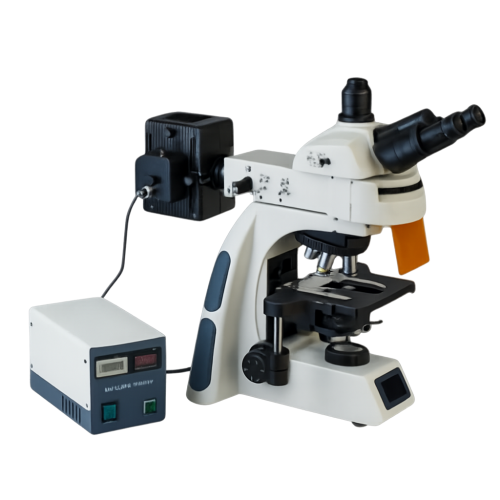
Fluorescence Microscope
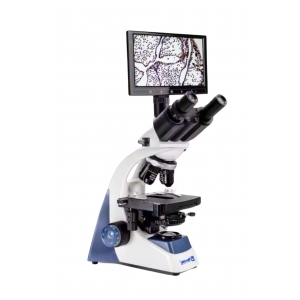
Fluorescence Microscope is an advanced microscopy system designed for high-contrast and detailed examination of biological samples, cells, and microorganisms using fluorescent dyes. It is widely used in molecular biology, microbiology, cell biology, and immunofluorescence analysis.
Through its fluorescence filter systems, the device directs specific wavelengths of light onto the sample and captures the emitted fluorescence from stained structures with high sensitivity. This enables visualization of cellular details that cannot be observed with conventional light microscopy.
Its advanced optical system, high-quality objective lenses, and powerful LED or mercury vapor illumination provide clear, high-contrast, and stable imaging. The system is designed to deliver reliable results in laboratories, research centers, and clinical analysis environments.
Technical Specifications
- Fluorescence filter cubes (FITC, DAPI, TRITC, etc.)
- High-resolution optical system
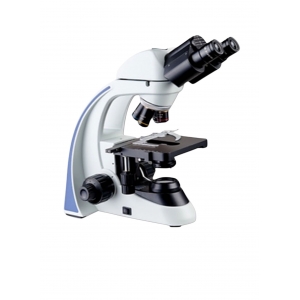
- Binocular or trinocular observation head
- 360° rotatable head design
- 30°–45° inclined viewing angle
- Wide-field eyepieces
- Multiple objective lens system (4x / 10x / 40x / 100x oil)
- Precision coarse and fine focus adjustment
- High-stability mechanical stage
- LED or mercury vapor fluorescence light source
- Adjustable light intensity
- Trinocular output for camera and photo integration
- Long-life optical components
- Ergonomic operating design
Applications
- Molecular biology studies
- Cell biology research
- Microbiology laboratories
- Immunofluorescence analysis
- Clinical research laboratories
- University and academic studies
Advantages
- High-contrast imaging of fluorescent-stained structures
- Detailed cellular and molecular-level analysis
- Powerful and stable illumination system
- High-resolution optical performance
- Ideal solution for research and clinical laboratories